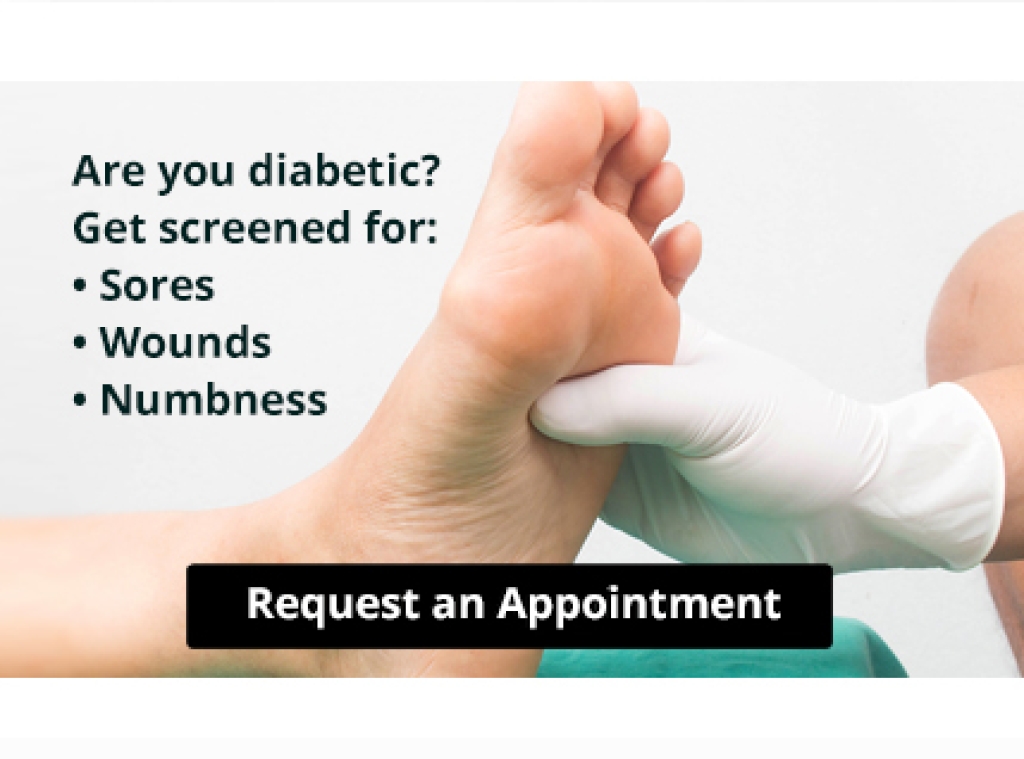
Your feet are covered most of the day. If you're diabetic, periodic screening is important for good health. Numbness is often a sign of diabetic foot and can mask a sore or wound.
Your feet are covered most of the day. If you're diabetic, periodic screening is important for good health. Numbness is often a sign of diabetic foot and can mask a sore or wound.
 Cleveland Browns rookie defensive end Myles Garrett has been declared inactive again after spraining his right ankle. Garrett was the number one overall draft pick of 2017. However, his debut has been continually pushed back due to a number of injuries. The injury was a high-ankle sprain, which will most likely take him out for four-to-six weeks. The team has been patient with Garrett and checks his ability to play every week. Garrett has missed four straight games so far and has only recently returned to practice.
Sports related foot and ankle injuries require proper treatment before players can go back to their regular routines. For more information, contact one of our podiatrists of Pennsylvania Foot & Ankle. Our doctors can provide the care you need to keep you pain-free and on your feet.
Sports Related Foot and Ankle Injuries
Foot and ankle injuries are a common occurrence when it comes to athletes of any sport. While many athletes dismiss the initial aches and pains, the truth is that ignoring potential foot and ankle injuries can lead to serious problems. As athletes continue to place pressure and strain the area further, a mild injury can turn into something as serious as a rupture and may lead to a permanent disability. There are many factors that contribute to sports related foot and ankle injuries, which include failure to warm up properly, not providing support or wearing bad footwear. Common injuries and conditions athletes face, including:
Sports related injuries are commonly treated using the RICE method. This includes rest, applying ice to the injured area, compression and elevating the ankle. More serious sprains and injuries may require surgery, which could include arthroscopic and reconstructive surgery. Rehabilitation and therapy may also be required in order to get any recovering athlete to become fully functional again. Any unusual aches and pains an athlete sustains must be evaluated by a licensed, reputable medical professional.
If you have any questions please contact one of our offices located in Bensalem, Philadelphia, Northeast Philadelphia, Yardley, PA, and Hamilton, NJ . We offer the newest diagnostic and treatment technologies for all your foot and ankle needs.
 Even when a runner takes precautions, it's not uncommon for them to still suffer an injury. However, do not let this deter you from running. While pre-workout stretching won’t prevent every injury, it is still important to do it. Some exercises that can help prevent running injuries include the partial squat, calf raises, and hip bridges. To do a partial squat, stand on one leg with arms forward for balance. Squat down a little, and then switch legs. This can help prevent knee pain. Calf raises can help prevent tendonitis. To do a calf raise stand on one foot, and bring your heel off the ground while standing on the ball of your foot. Then, come back down and use the other foot. Finally hip bridges can strengthen glutes, which takes pressure off of the feet and ankles when running. To do a hip bridge, lay your upper back on an object while keeping your feet on the ground and your legs bent at a 90 degree angle. Then dip with your pelvic region, and come back up to form a parallel line with the ground using your body. Do each of these 10 times and for 2-3 sets. Remember to ask your podiatrist if running and stretching is right for you.
Exercising your feet regularly with the proper foot wear is a great way to prevent injuries. If you have any concerns about your feet, contact one of our podiatrists of Pennsylvania Foot & Ankle. Our doctors will treat your foot and ankle needs.
How to Prevent Running Injuries
Many common running injuries are caused by overuse and overtraining. When the back of the kneecap starts wearing out and starts causing pain in your knee, this is commonly referred to as runner’s knee. Runner’s knee is a decrease in strength in your quadriceps and can occur if you’re not wearing properly fitted or supporting shoes. To prevent runner’s knee, focusing on hip strengthening is a good idea, as well as strengthening your quads to keep the kneecaps aligned.
What Are Some Causes of Running Injuries?
- One cause of a common running injury is called iliotibial band syndrome.
- Plantar fasciitis is also another common injury.
- Stress fractures can occur from overtraining, lack of calcium, or even your running style.
Best Ways to Prevent Running Injuries
- Wear footwear that fits properly and suits your running needs.
- Running shoes are the only protective gear that runners have to safeguard them from injury.
- Make a training schedule. Adding strengthening exercises as well as regular stretching can help keep you strong and limber and can lessen the possibility of injuries.
- Stretching keeps muscles limber; this will help you gain better flexibility.
If you have any questions, please feel free to contact one of our offices located in Bensalem, Philadelphia, Northeast Philadelphia, Yardley, PA, and Hamilton, NJ . We offer the newest diagnostic and treatment technologies for all your foot care needs.

You don't need an excuse to have beautiful nails. Step outside without worrying about the appearance of your feet.
 Choosing the right running shoes for you can mean the difference between comfort and potential injury. Not all running shoes are built the same. They vary not just in foot size and style but also in the surfaces they were designed for. If you run on trails, a trail running shoe is a better choice than a running shoe designed for roads or the track. The shoe should have enough space so your feet aren’t cramped but should still be snug. Knowing whether your foot rolls in too much (overpronation), rolls out too much (underpronation), or stays where it is (neutral) when you step can also determine what shoe is right for you. However it is advised to not worry too much about foot roll. The most important part is comfort. You should be able to wear the shoes for long periods without feeling pain or discomfort.
If you are a runner, wearing the right running shoe is essential. For more information, contact one of our podiatrists from Pennsylvania Foot & Ankle. Our doctors can provide the care you need to keep you pain-free and on your feet.
Choosing the Right Running Shoe for Your Foot Type
To increase performance and avoid the risk of injury, it is important to choose the right running shoe based on your foot type. The general design of running shoes revolves around pronation, which is how the ankle rolls from outside to inside when the foot strikes the ground.
If you have any questions, please feel free to contact one of our offices located in Bensalem, Philadelphia, Northeast Philadelphia, Yardley, PA, and Hamilton, NJ . We offer the newest diagnostic and treatment technologies for all your foot care needs.
Connect With Us
